How the Wankhede pitch plays in the IPL
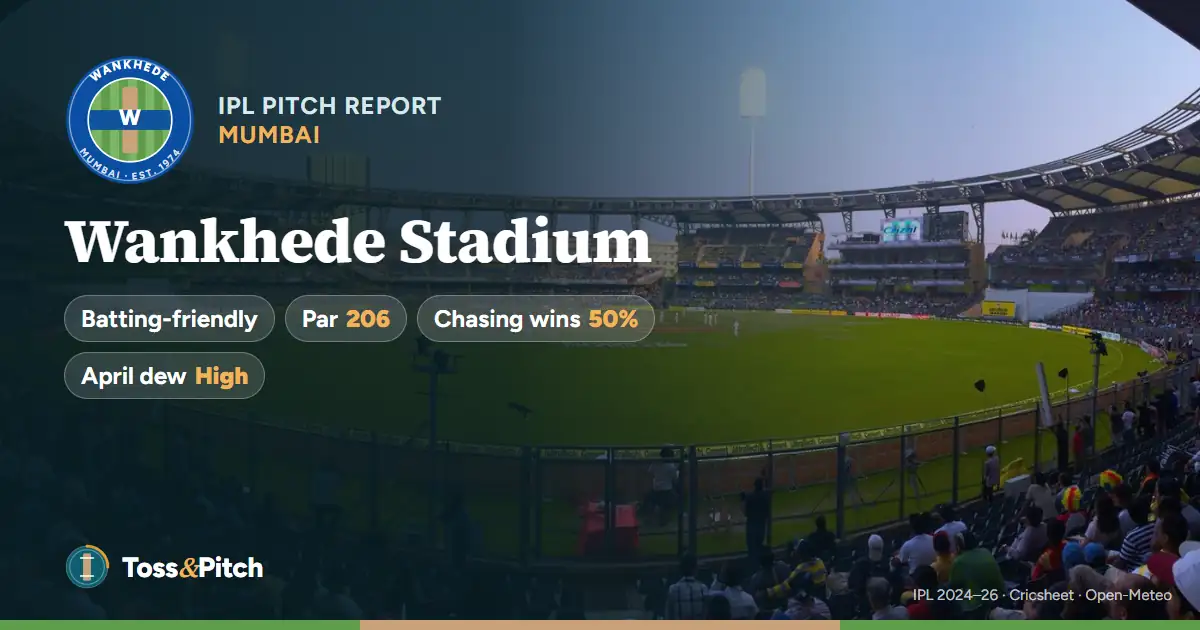
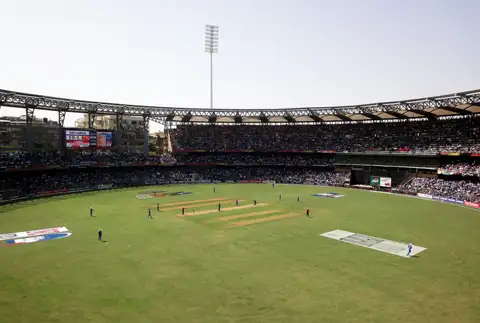
Banner photo: Anand Desai · CC BY 3.0 · Wikimedia Commons, File:Wankhede Stadium (86312941).jpeg
Pitch verdict: Batting-friendly
Based on 21 IPL matches in 2024–26 (Cricsheet data to 31 May 2026)
Bat–bowl index 7/10 · 10 = easiest for batting
Wankhede is a batting ground. In IPL 2024–26 (21 matches) the first innings averaged 196, and par, the median first-innings total, was 206. In 2026 the first-innings average reached 220. Toss winners fielded 95% of the time, yet decided games split evenly, 10 wins each for the sides batting first and second. Our verdict: batting, 7 out of 10.
- Par score
- 206
- Chasing sides won
- 50%
- Toss winners chose to field
- 95%
How the pitch plays
The square at Wankhede is made of local red soil, which is known for giving extra bounce. Fast bowlers can use that carry early in an innings, but the ball also comes on to the bat, and once it softens the surface has rewarded batters who trust the bounce and play through the line.
The numbers show how far the ground has moved. Across all 132 IPL matches here the first innings averages 173. In IPL 2024–26 it is 196, with 20.6 sixes per match against an all-time rate of 14.5. The second innings has risen too, from 162 all-time to 179 since 2024, so big totals are not only being set but chased.
Key numbers, IPL 2024–26
- Average 1st-innings score
- 196median 206
- Average 2nd-innings score
- 179
- Won batting second
- 50%10 of 20 decided
- Toss winner won the match
- 45%
- Sixes per match
- 20.6
- Highest total
- 249/4SRH v MI, 29 Apr 2026
21 matches, 1 rain-reduced (left out of averages). Source: Cricsheet ball-by-ball data.
Follow your IPL team
Pick your team on My Match Day and its home grounds come first. Match-morning alerts for your team are being added before IPL 2027.
First innings, phase by phase
| Phase | Runs 2024–26 | Wkts 2024–26 | Runs, all IPL | Wkts, all IPL |
|---|---|---|---|---|
| Powerplay, overs 1–6 | 60 | 1.6 | 47 | 1.4 |
| Middle, overs 7–15 | 81 | 2.5 | 74 | 2.3 |
| Death, overs 16–20 | 56 | 2.2 | 53 | 2.4 |
Toss and chasing
Wankhede captains field first almost every time. In IPL 2024–26, 95% of toss winners chose to bowl, compared with 76% across all IPL matches at the ground. Evening dew, common in Mumbai in April and May, is the obvious reason for that choice.
The results are closer than the habit suggests. Of the 20 decided full-length games in IPL 2024–26 (one rain-shortened match is left out), 10 were won by the side batting first and 10 by the chasers, and toss winners won only 45% of matches. In 2026, Mumbai Indians (MI) chased 221 against Kolkata Knight Riders and 229 against Lucknow Super Giants, while Royal Challengers Bengaluru defended 240 and Chennai Super Kings bowled MI out for 104 chasing 208.
Phase by phase
In IPL 2024–26 the average first innings at Wankhede broke down as 60 runs for 1.6 wickets in the powerplay (overs 1–6, when only two fielders may stand outside the 30-yard circle), 81 runs for 2.5 wickets in overs 7–15 and 56 runs for 2.2 wickets in overs 16–20.
The powerplay is where Wankhede differs most from its past. The all-time average for overs 1–6 is 47 runs; since 2024 it is 60, a rise of 13 runs in six overs. Teams that keep wickets in hand through the first six overs have the platform for a 200-plus total, because the death overs here produce more runs and fewer wickets (56 for 2.2) than the all-time average of 53 for 2.4.
For the fielding side, overs 7–15 are the best chance to slow things down. The middle phase produces the most wickets in an average first innings here, 2.5, and the run rate of nine an over is lower than in the powerplay. A side that takes two or three wickets in that spell can drag a likely 220 back towards the par of 206, which is still a demanding chase.
Dew and night games
Mumbai evenings in the IPL months are warm and humid. Averages for 2021–25 put humidity at 10 pm at 79% in April and 80% in May. Heavy dew, when the air cools to within 3°C of its dew point by 10 pm, was recorded on 42% of April evenings and 36% of May evenings, and some dew on a further 40% and 55%.
Dew makes the ball harder to grip in the second innings, which hurts spinners most and makes yorkers harder to land. That is why captains field first here. March is drier, with heavy dew on 21% of evenings, so early-season games are less affected. Afternoon matches are less extreme in Mumbai than inland, with an average of 31.7°C at 4 pm in April.
What has changed recently
First-innings averages by season: 167 in 2022, 198 in 2023, 188 in 2024, 178 in 2025 and 220 in 2026. The 2022 figure comes from 21 matches, when the ground hosted a large share of a season played in Mumbai and Pune; every other season had between four and ten games here.
The 2026 season was the highest-scoring at Wankhede in our data. All seven first innings reached 195 or more, three of them passed 220, and the 243 for 5 MI made against Sunrisers Hyderabad on 29 April was overtaken in the same match. With a sample of seven games, 2026 may prove an outlier, but every season since 2023 has averaged at least 178, well above the ground's long-run figure of 173.
Tonight's conditions
Dew decides many night games here. The live forecast shows evening temperature, dew and rain chances hour by hour.
Wankhede in pictures
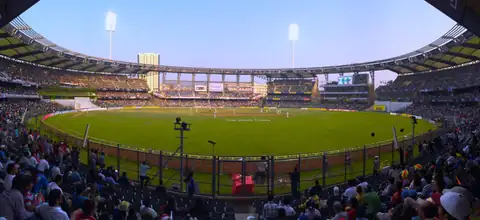
Wide view of the ground and stands with floodlight towers
Photo: Anand Desai · CC BY 3.0 · Wikimedia Commons, File:Wankhede Stadium (86312941).jpeg
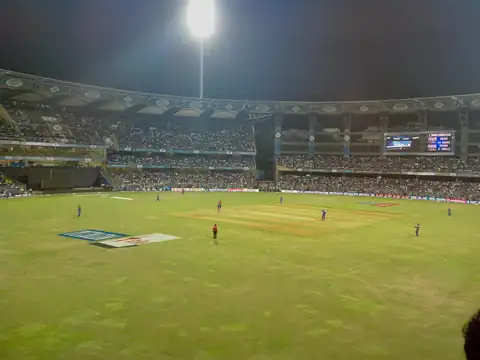
Floodlit ground during a 2013 IPL night match
Photo: Manas46951, 2013 · CC BY-SA 4.0 · Wikimedia Commons, File:Wankhede stadium.jpg
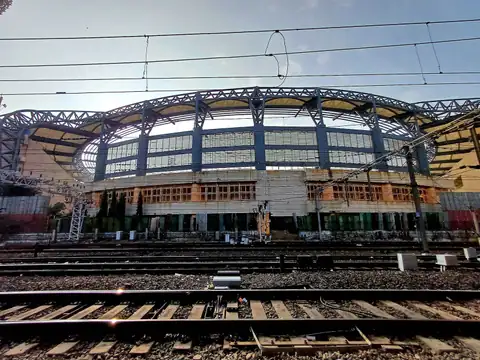
Stadium roof and stands seen from Marine Lines railway tracks
Photo: DesiBoy101, 2024 · CC BY 4.0 · Wikimedia Commons, File:Wankhede Stadium as seen from Marine Lines, Mumbai.jpg
Ground and stands during the first innings of the 2011 World Cup final
Photo: G patkar, 2011 · CC BY-SA 3.0 · Wikimedia Commons, File:Wankhede Stadium.jpg
Last 10 IPL matches here
| Date | 1st innings | 2nd innings | Result | Toss |
|---|---|---|---|---|
| RR 205/8 | MI 175/9 | RR won by 30 runs | MI · bowl | |
| LSG 228/5 | MI 229/4 | MI won by 6 wkts | MI · bowl | |
| MI 243/5 | SRH 249/4 | SRH won by 6 wkts | MI · bat | |
| CSK 207/6 | MI 104/10 | CSK won by 103 runs | MI · bowl | |
| MI 195/6 | PBKS 198/3 | PBKS won by 7 wkts | PBKS · bowl | |
| RCB 240/4 | MI 222/6 | RCB won by 18 runs | MI · bowl | |
| KKR 220/4 | MI 224/4 | MI won by 6 wkts | MI · bowl | |
| MI 180/5 | DC 121/10 | MI won by 59 runs | DC · bowl | |
| MI 155/8 | GT 147/7 | GT won by 3 wkts (DLS) | GT · bowl | |
| MI 215/7 | LSG 161/10 | MI won by 54 runs | LSG · bowl |
Match Day: the report one tap away
Add Toss & Pitch to your home screen — no Play Store, no sign-up. Grounds you have opened still load inside a packed stadium with no signal.
What the conditions mean for markets
Total runs
Par here is 206. First-innings lines well below that look low on a normal surface. The average first innings was 188 in 2024 and 220 in 2026.
Match winner
Sides batting second won 50% of decided games in 2024–26. Check the dew forecast before the toss.
Top batter
RG Sharma has scored the most IPL runs at this ground (2632). Form and the batting order matter more than history.
Compare tonight's lines
Pitch-based markets (match total, toss, top batter) at licensed partner bookmakers.
18+ only. Partner links. Odds change; check terms before you play.
Questions people ask
Is the Wankhede pitch good for batting or bowling?
Batting. In IPL 2024–26 the first innings averaged 196 and the second 179, with 20.6 sixes per match. The red-soil square gives bounce that fast bowlers can use early, but scoring has risen every way. We rate it 7 out of 10.
What is the par score at Wankhede Stadium?
Par, the median first-innings total in IPL 2024–26, is 206. The average is 196. In 2026 alone the first innings averaged 220 across seven matches.
Why do captains bowl first at Wankhede?
Mainly because of evening dew, which makes the ball wet in the second innings. Heavy dew was recorded on 42% of April and 36% of May evenings in 2021–25. In IPL 2024–26, 95% of toss winners chose to field.
Does chasing win more often at Wankhede?
Not recently. In IPL 2024–26 the 20 decided matches split 10 apiece between sides batting first and second. Across all IPL matches at the ground, chasing sides have won 55% of decided games.
What kind of soil is the Wankhede pitch?
The whole square is made of local red soil. Red soil tends to give more bounce and carry than the black soil used at some other Indian grounds.
The ground
- Capacity
- 33,100
- Opened
- 1974, rebuilt 2011
- Ends
- Tata End · Garware Pavilion End
- Pitch soil
- Local red soil across the square
- IPL home side
- MI
- Owner
- Mumbai Cricket Association
Schematic, not to scale. Boundary lengths are not published by the MCA.
Keep Wankhede handy
Save the ground to My Match Day and it opens first next time. Nothing leaves your phone.